


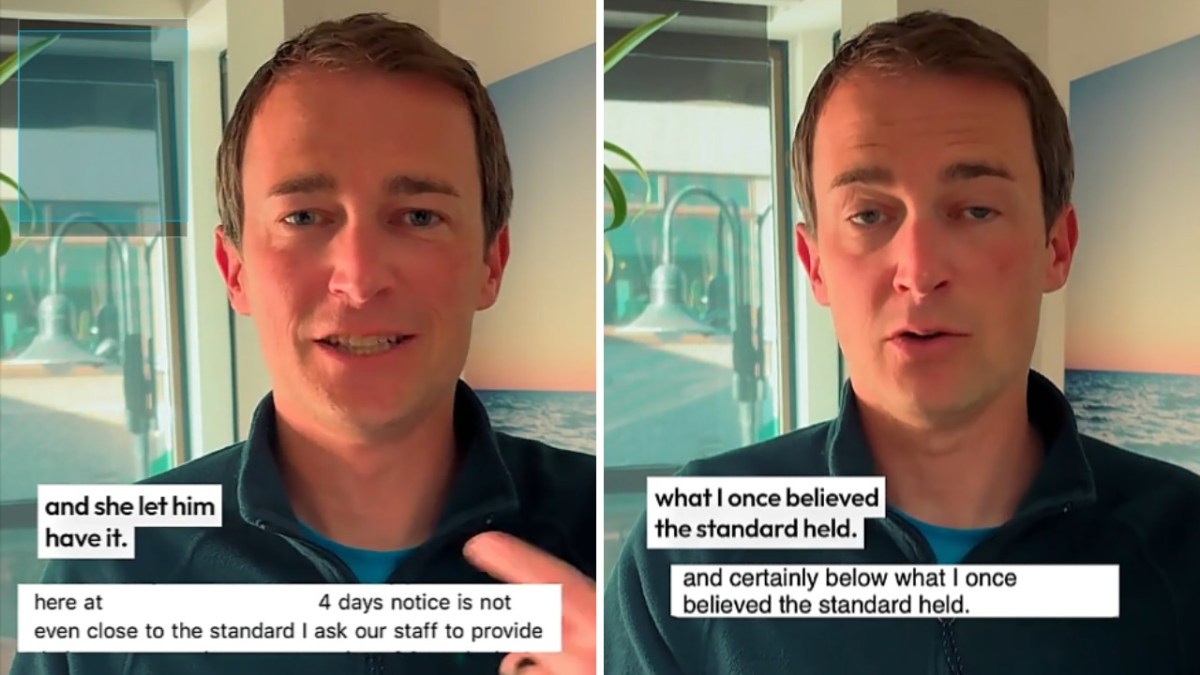

A pastry worker at an upscale hotel says she resigned with four days’ notice and pushed back when her manager objected, according to the Daily Dot. The outlet reported on emails that a TikTok creator shared in a video and said it could not confirm them. In her reply to the manager, she pointed to a sexual harassment complaint she says was mishandled.
In her first email, the woman offered to keep working on a “per diem basis” if the hotel needed her, the creator said. She thanked her manager, said she would miss her coworkers and wrote that she was taking the next step in her career. “What a thoughtful email,” the creator said.
Her manager answered that he wanted to talk once she was back from vacation. He objected to the timing, writing, “Four days’ notice is not even close to the standard I ask my staff to provide their current employer, as the notice of two weeks is the bare bones asked of employees in all industries.” If she still planned to leave, he said he would treat the date of her email as the start of a two-week notice period.
Her reply cited New York law
The woman wrote back that the at-will rule in New York lets either side end a job whenever they choose, for any reason at all, according to the creator. She said the employer had a habit of slashing shifts to little or nothing once workers gave two weeks’ notice. She wrote that staff who did so faced serious consequences, by the creator’s account.
She then brought up the sexual harassment complaint she had filed. In the creator’s reading, the coworker she reported stayed on the payroll, while her own shifts were rearranged around him. “So, so good. This is the way to go out,” the creator said.
New York’s highest court has held that a job with no fixed end date “is presumed to be a hiring at will which may be freely terminated by either party at any time for any reason or even for no reason,” in Murphy v. American Home Products Corp. New York law generally does not require workers to give two weeks’ notice, though a contract or union agreement can set different terms, according to the Brandon J. Broderick law firm.
Retaliation is a different matter. Under New York Executive Law § 296(7), it is unlawful to retaliate against someone because they opposed discrimination or filed a complaint. The state’s model sexual harassment policy lists “reduced hours, or the assignment of less desirable shifts” among examples of retaliation.
The same policy says investigations of harassment complaints should be “prompt, thorough, and started and completed as soon as possible.” Workers can file a sexual harassment complaint with the state Division of Human Rights within three years, or with the federal Equal Employment Opportunity Commission within 300 days of the most recent incident.
Neither the worker, her manager nor the coworker she reported has been identified. The hotel has not been named and has not publicly responded to the account, and the outlet did not report any response from the manager.













Published: Oct 2, 2026 03:51 pm