


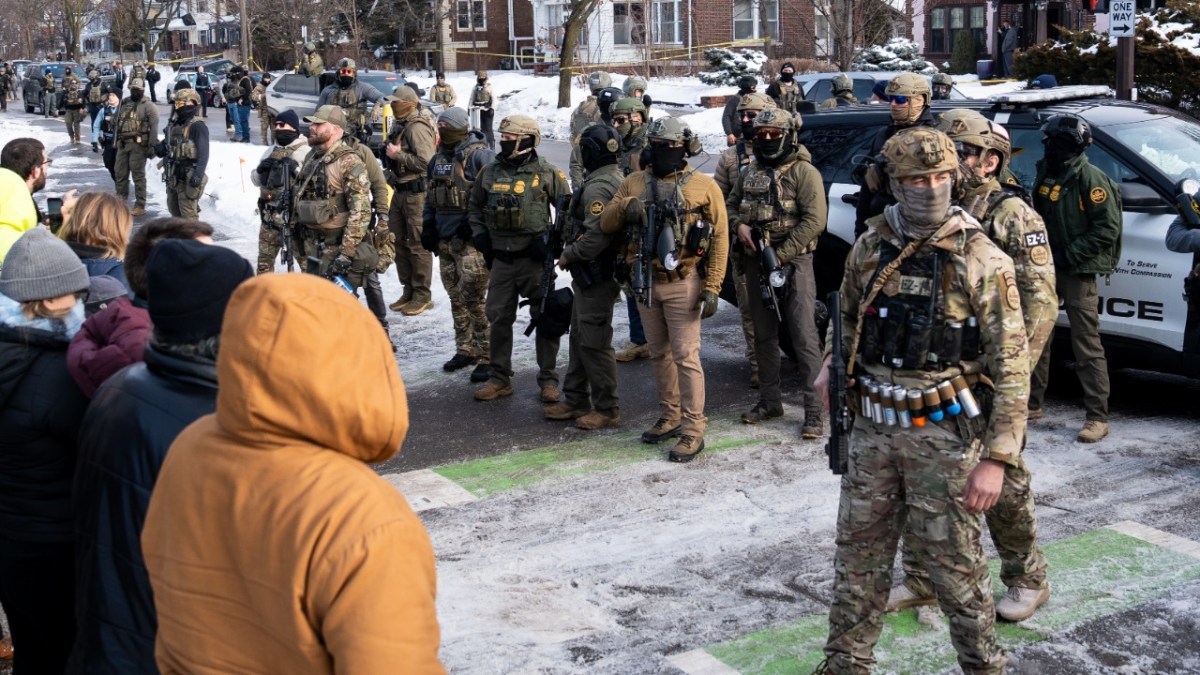

A federal watchdog report urges ICE to add safeguards so that officers’ body cameras are running when required. The department that oversees the agency turned down the main proposal. According to the Associated Press, the Government Accountability Office recommended technology that would start recording on its own, and the Department of Homeland Security declined, citing privacy.
The GAO report, released publicly on Wednesday, lists seven recommendations, and Democratic lawmakers, including Rep. Bennie Thompson, requested the review. DHS agreed to six and declined the one telling ICE to add controls such as automated activation, which GAO said would help ensure cameras are used as policy requires. Another report stated that Customs and Border Protection already uses cameras that switch on when an officer draws a firearm or turns on emergency lights, while ICE does not.
DHS argued that automatic activation carries operational risks, including “inadvertent or false activations during routine movement.” It also warned that the technology could lead to “the unauthorized recording of sensitive interactions with informants or victims,” and could capture people taking part in protected First Amendment activity. Under the current approach, officers are to switch cameras on when planned enforcement actions begin, which leaves activation to the individual officer.
Confusion over when to record
GAO said staff at six of the 10 locations it reviewed were unsure when cameras had to be on. Officers were also unsure about recording while searching vehicles or moving detainees, and some described the requirements as “up to interpretation.” One ICE location had not started using its cameras at all despite training, because staff were unclear on the rules.
Neither CBP nor ICE had refreshed its program plan, GAO said, even as staffing and equipment grew. CBP last revised its plan in 2022, and ICE did so in 2024. GAO counted about 11,500 cameras at CBP and about 4,800 at ICE as of mid-2026. Both agencies track camera availability, but GAO said they have not set measurable goals, such as how footage is used in use-of-force investigations.
Questions about the rollout followed. Lawmakers provided $20 million for completing ICE’s camera plan, and in July, officers fatally shot Lorenzo Salgado Araujo in Houston without wearing cameras. DHS said at that point that over half of its field offices had been supplied. By Aug. 5, every ICE office had been issued cameras, DHS told GAO. A DHS statement on Wednesday said officer training continues and should finish “soon.”
Critics argue that footage could add accountability, a point lawmakers have raised after incidents such as when an ICE agent shot a DoorDash driver in Austin. The report does not cover the high-profile shootings. Through September 2025, ICE had issued no written reprimands for failing to follow camera policies, and CBP had issued one.







Published: Oct 16, 2026 01:57 pm