


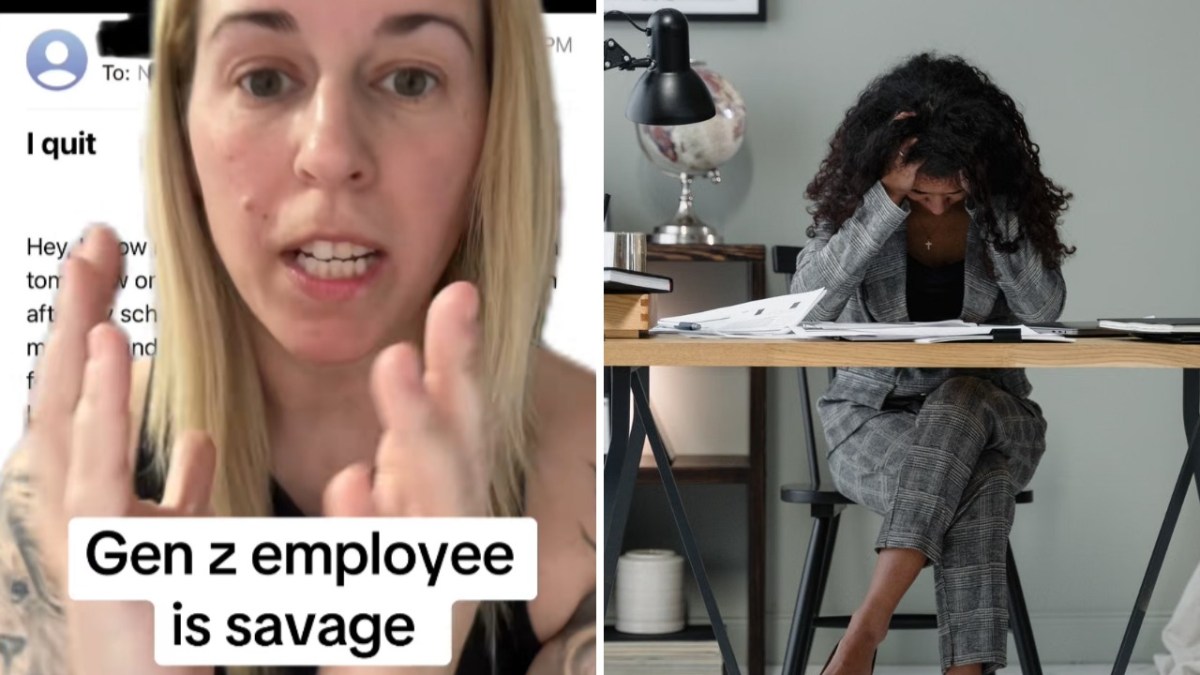

An employee sent a Sunday-night resignation email saying she would not come back, according to the Daily Dot. The outlet states she wrote that a meeting had held her at work 25 minutes beyond her shift the week before. The report adds that the email was shown in a TikTok video, captioned, “I can’t believe they’d send this to quit a job for real.”
The coverage states the email opens with, “Hey, I know it’s Sunday night, but I’m not coming in tomorrow or ever again.” The employee added that she had joined her employer’s chief competitor, where she wrote the pay was double. The employer and the competitor are not named in the coverage.
The report states that a comment under the video, from an account identifying as the employee, confirmed the email was hers. “I’m so much happier now!!” the comment said. The story also says the clip prompted fresh arguments about two weeks’ notice. Some users said workers should not owe it, because employers can sometimes end a job without warning. Others said leaving abruptly can hurt a worker’s reputation over the long run.
When a late meeting counts as work
Federal rules address whether meeting time counts as work. Under 29 CFR 785.27, a meeting is left out of working time only when four conditions all hold. It has to fall outside regular hours and be voluntary. It also cannot be directly related to the job, and the employee can do no productive work during it.
The Labor Department’s hours-worked fact sheet adds that a workday can run longer than a scheduled shift. It says work an employer did not request but allowed is work time that must be paid for. The sheet also describes an employee who stays on voluntarily to finish a task at the end of a shift. It says those hours are compensable whatever the reason.
The department’s FLSA questions and answers page speaks to the notice argument from the employer’s side. It says the law has no requirement that an employee receive notice before termination or layoff. The WARN Act and some state laws can require notice in certain cases. The page also says covered, nonexempt workers must receive overtime of at least one and one-half times their regular rate after 40 hours of work in a workweek.
It adds that the law does not cap daily or weekly hours for workers 16 and older. An employer may also change work hours without prior notice unless an earlier agreement says otherwise. The U.S. Department of Labor says federal law does not require an employer to hand over a final paycheck immediately, although some states may.
If the regular payday for the last pay period has passed without payment, a worker can contact the agency’s Wage and Hour Division or the state labor department.







Published: Oct 8, 2026 12:22 pm