


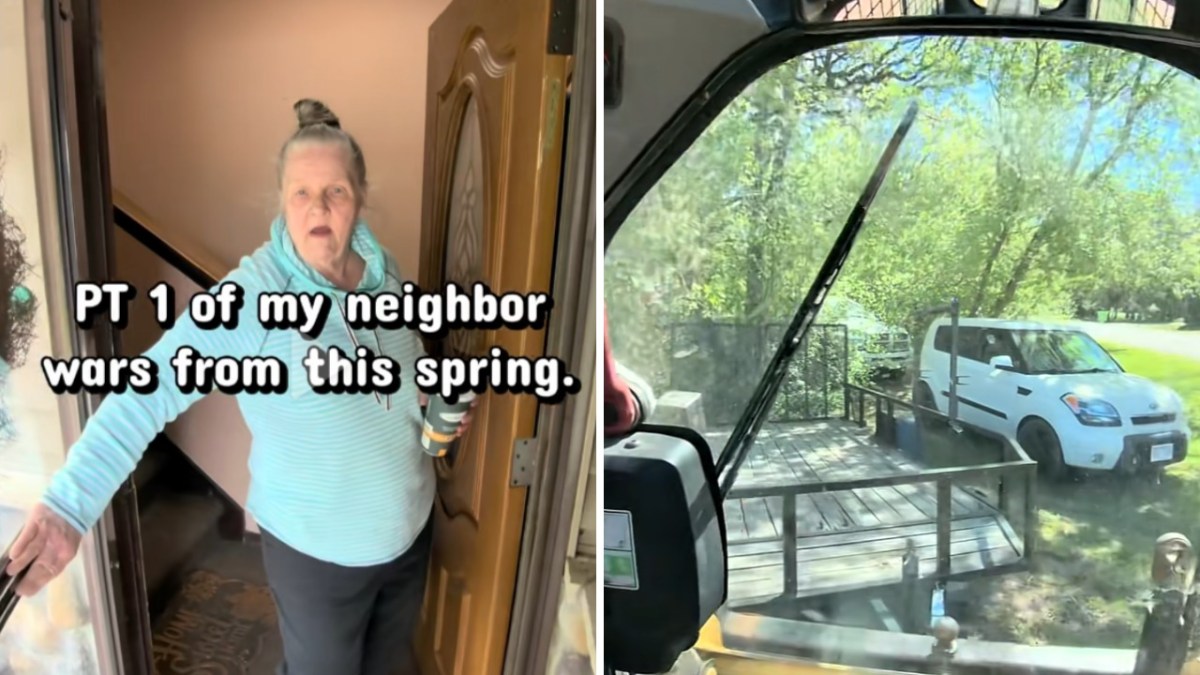

Wisconsin farmer Brandyn Grundy went viral on TikTok after filming himself asking a neighbor to move vehicles parked on his property, according to BroBible. When he confirmed the vehicles were hers, she answered plainly, “That’s right.” He then asked her directly to move it. Her response was just as blunt: “No.” Grundy tried reasoning with her, pointing out that the vehicles were sitting on his land, but she wasn’t budging. “I don’t care. I mow it every **** week,” she said.
Grundy told her he’d put up a fence and call the sheriff’s department instead, adding, “I’m the one that pays the taxes on the land and your ****’s in my **** field!” He says the dispute has continued for five years. The neighbor’s identity is not disclosed in the outlet’s reporting, and there’s no indication she was contacted for comment.
In a follow-up video, Grundy said the sheriff had spoken with the neighbor and one truck had been moved, but a Kia Soul remained. He then brought out fencing materials and a trailer, positioning it in front of the Kia in what appeared to be an attempt to box the car in rather than have it towed. The outlet stated it reached out to Grundy for comment.
What Wisconsin law actually allows here
Wisconsin law makes it illegal to park on someone else’s private property without permission, but towing isn’t automatic. Under Wisconsin Statute 349.13(3m), a landowner can only have an unauthorized vehicle towed immediately, without going through the owner, if the property is “properly posted” with signs at every entrance stating it’s private property and that unauthorized vehicles will be towed, along with contact information and the maximum towing charge.
Without that signage in place, removal generally requires either a citation for illegal parking or a repossession judgment first. Separately, Wisconsin’s criminal trespass statute, § 943.13, covers entering or remaining on someone else’s land without consent, but only once the person has received notice, whether posted, written or verbal, telling them not to enter or to leave.
A five-year pattern of repeated confrontations like the one described here could plausibly establish that notice, potentially exposing the neighbor to a charge ranging from a Class B forfeiture up to a Class A misdemeanor depending on the circumstances.
Physically trapping someone else’s vehicle raises a different legal question. Wisconsin recognizes a tort called conversion, which covers deliberately interfering with someone else’s right to use or access their own property, even temporarily. Boxing in a car with a trailer and fence could expose a property owner to a conversion claim, separate from and in addition to whatever trespassing claim they might have against the person who parked there in the first place.
The more legally straightforward option in a case like this remains a lawful tow.





Published: Sep 25, 2026 01:15 pm