


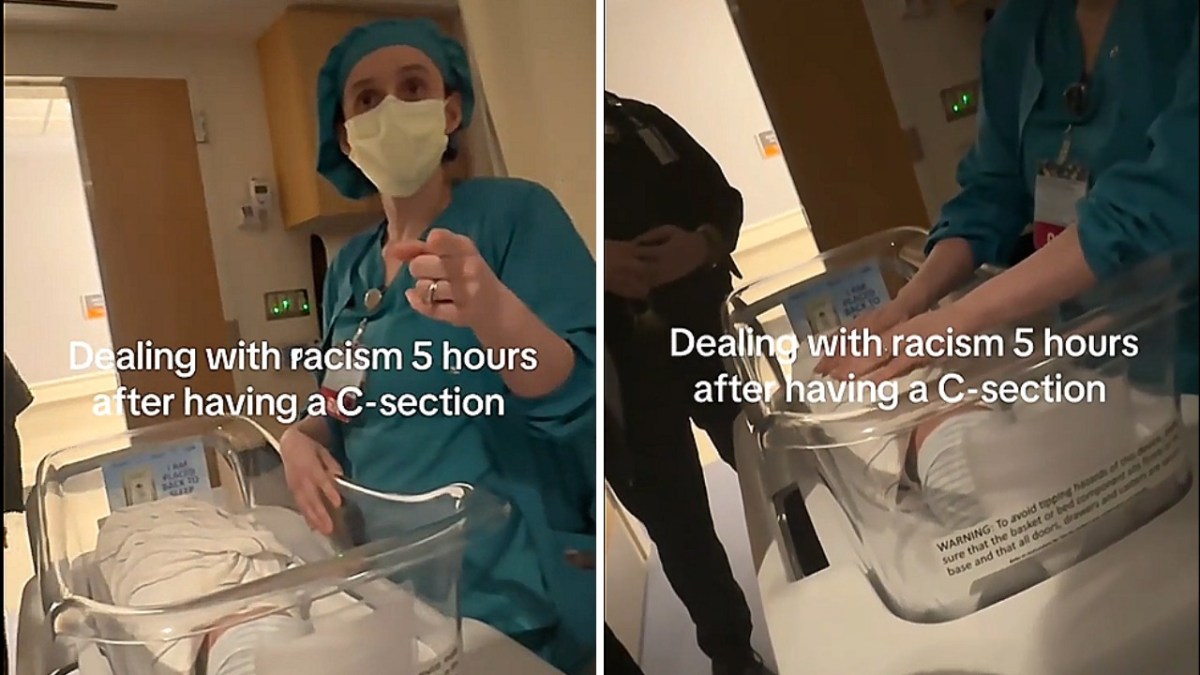

A mother who underwent a C-section hours earlier is seen in a video requesting her newborn as a nurse tells her she may leave but the baby must stay. According to Knewz, staff also mention calling police during the exchange, and the mother states that she feels unsafe.
The video was posted on TikTok by the account What’s Cracking America. In it, the mother repeatedly tells staff, “I want my baby.” A nurse is next to the baby’s bassinet, and a person who looks like a security officer stands farther back. The nurse responds, “But you can leave. Baby will have to stay here.” The mother mentions the baby remaining for 24 hours.
Recording becomes a point of dispute. The nurse states, “I will press charges because you cannot record us,” and adds that staff must consent. She links the situation to the newborn’s safety “because you are very hype,” and the mother replies, “I’m not hype.” Staff tell the mother police are on the way, and she rejects a claim that she shoved a nurse: “I didn’t push her. I didn’t do anything.” The clip covers only part of the encounter.
Laws and CDC data frame the dispute
Which recording rules apply would depend on the state where the video was filmed. According to the Anesthesia Patient Safety Foundation, 37 states require only one participant to consent to an audio recording, nine require everyone’s consent and four have mixed rules. The foundation adds that state law outranks hospital policy, and that HIPAA protects patients from being photographed or videotaped while wiretap laws cover audio of anyone, including clinicians.
On the hospital stay, the federal Newborns’ and Mothers’ Health Protection Act concerns insurance coverage. It bars group health plans and insurers from limiting coverage to less than 48 hours after a vaginal birth or 96 hours after a cesarean section. Earlier discharge is allowed when an attending provider decides on it in consultation with the mother, under the same law.
Claims of race-based mistreatment at hospitals that receive federal funds fall under Title VI of the Civil Rights Act, which bars discrimination based on race, color or national origin. Section 1557 of the Affordable Care Act extends similar protection to health programs, and people can file a complaint with the HHS Office for Civil Rights.
The TikTok account presented the clip as racist treatment after childbirth and argued that it “should have been handled so differently.” It pointed to CDC data showing 50.3 maternal deaths for every 100,000 live births among Black women in 2023, against 14.5 among white women.
Other mothers have shared accounts of maternity care online, such as when a mother says ulcers were dismissed as hormonal before her newborn died.











Published: Oct 23, 2026 12:57 pm