




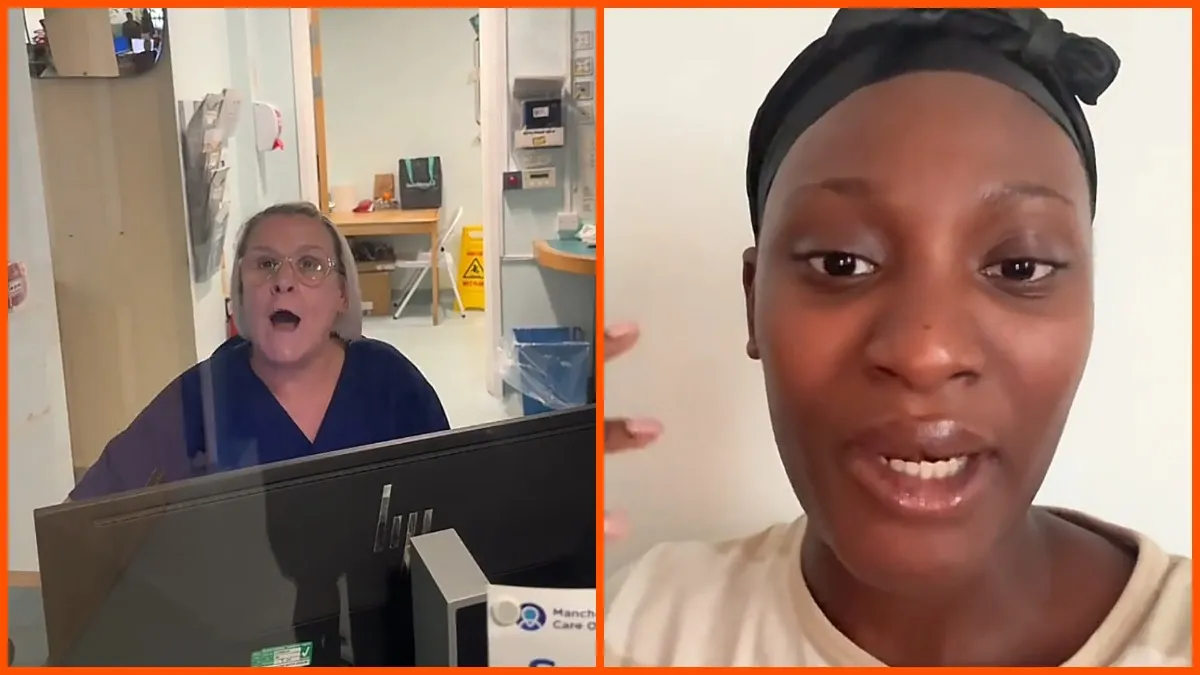
Leon Khan met Sylwia Anczakowska while she worked as a health care facilitator and he was a patient on the Derby ward at St Bernard’s Hospital in Southall, West London. Jurors at Isleworth Crown Court heard that once he was moved wards, she made no attempt to speak to him, and he allegedly sent her a Facebook message asking, “Am I a ******?” She blocked him and reported the message to her employer, who moved her into a role with no patient contact, jurors were told.
Khan is accused of sending Anczakowska around 50 emails and 17 MP3 files over 20 months, including messages under aliases such as “Freedom 2025” and “Switch 123” after his discharge in September 2025. Prosecutors say she reported the messages to police but kept receiving up to six a day, including one asking her to meet him in Kensington, which she ignored. Jurors also heard she left the hospital to take a job at Car Planet, a car dealership in Enfield.
“The Crown’s case is that the defendant has carried out a course of conduct and we say it certainly amounts to stalking,” prosecutor Miles Trigg told the court. “It seems clear from what he has said in the emails that he believed he loved her and that she him.” Once Khan was discharged, prosecutors say, he kept emailing her in an effort to arrange a meeting, apparently believing his feelings were mutual.
He didn’t stop at emails
Trigg told the court that pressure built until Khan set what he called “an ultimatum,” demanding she meet him on Feb. 12. Jurors heard that on Valentine’s Day, Khan repeatedly called the dealership and told her boss, Asif Hussain, he would “send guys around,” warned he’d send a “package,” and said the business would “be no more.”
He’s also accused of falsely claiming Anczakowska had stolen from him and belonged to a criminal gang. “It is perfectly clear in making these claims and through these many calls he was trying to get her sacked from her job,” Trigg said. Khan denies stalking involving serious alarm or distress between June 1, 2024, and Feb. 15, 2026. The case is ongoing.
Under Section 4A of the Protection from Harassment Act 1997, stalking becomes a criminal offense when a course of conduct causes someone to fear violence on at least two occasions, or causes serious alarm or distress that substantially affects their daily life, and the person knew or should have known it would have that effect.
It’s an either-way offense, meaning it can be tried in a magistrates’ court or the Crown Court, and Parliament raised the maximum sentence from five to 10 years under the Policing and Crime Act 2017. Separately, threatening to destroy someone’s business or send people to harm them, as prosecutors allege happened at the dealership, could independently support a charge under Section 4 of the same act, which covers conduct that causes someone to fear violence will be used against them.







Published: Sep 17, 2026 02:48 pm