


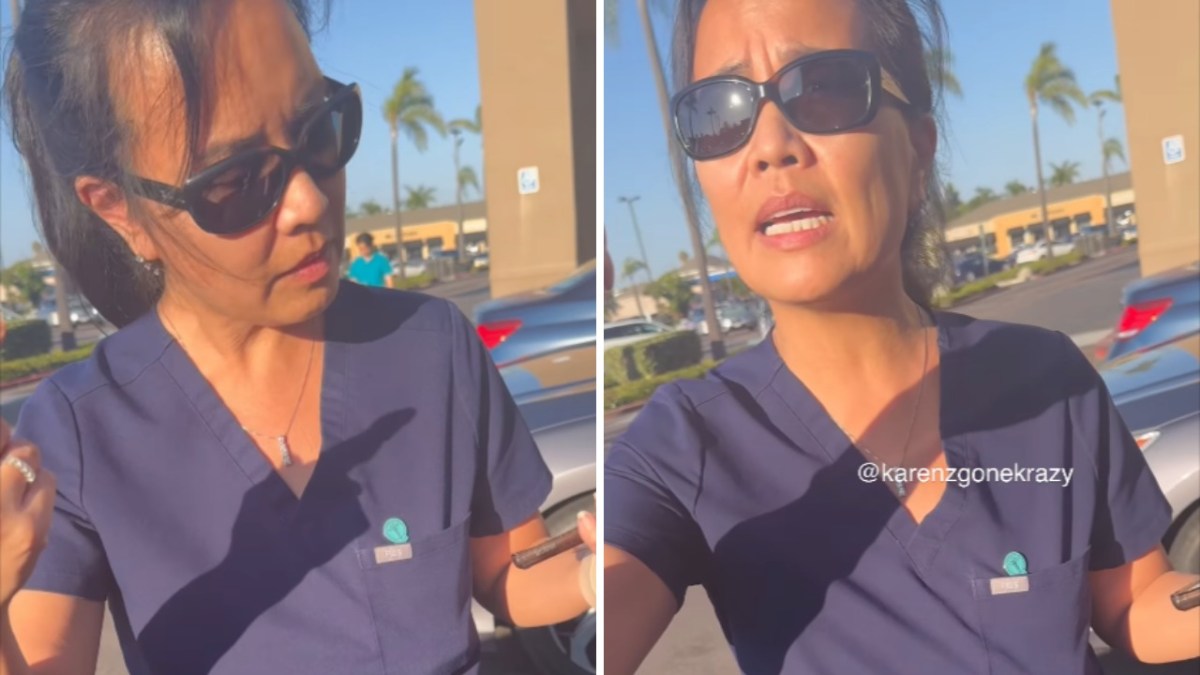

A video posted Sept. 30 on Instagram shows a driver and another woman arguing after what looks like a minor collision between cars in a lot, according to Atlanta Black Star. The outlet identifies the driver, who recorded the exchange, as a Black woman, and says the other woman accused her of having stolen the vehicle. The report does not say where the clip was filmed or who either woman is, and it includes no response from either of them.
By the outlet’s account, the clip begins with the driver saying the woman is crowding her personal space. The woman then demands the driver’s registration and tells her, “Do not say the F-word,” and the outlet says the driver replied with a profanity. The woman says she will dial 911 over the language and then says the driver would not use that word with her if the woman were white.
“How do you know that?” the driver asks. “I just know it,” the woman answers, per the outlet. She then accuses the driver of taking the vehicle and of having no insurance, saying, “I think you stole this.” The outlet notes that the vehicle is not shown in the footage, though both women suggest it is costly. The driver suggests the woman wait inside her own vehicle, according to the outlet, and says, “You think I’m gonna drive off because of the color of my skin?”
What the rules say about exchanging information after a crash
The report says it is unclear if the two ever swapped insurance details. The American Automobile Association advises drivers to collect “each driver’s name, driver’s license number, and auto insurance carrier and policy number” after an accident. What a driver must hand over, including whether registration has to be shown, depends on state law, and the report does not say which state the video was filmed in.
California offers one example. Under Vehicle Code § 16025, “Every driver involved in the accident shall, unless rendered incapable, exchange with any other driver or property owner involved in the accident and present at the scene, all of the following information.” The list covers the driver’s name, address and license number, the vehicle identification number, and the insurer’s name, address and policy number.
A driver who does not comply is “guilty of an infraction punishable by a fine not to exceed two hundred fifty dollars ($250).” Cursing during a dispute is a separate legal question. In Cohen v. California, a 1971 decision, the U.S. Supreme Court held that “the State may not, consistently with the First and Fourteenth Amendments, make the simple public display of this single four-letter expletive a criminal offense.”
The ruling is available on Cornell’s Legal Information Institute. The report does not describe any police involvement, a complaint, or any trade of information afterward, so how the dispute ended remains unknown.




Published: Oct 3, 2026 12:24 pm