


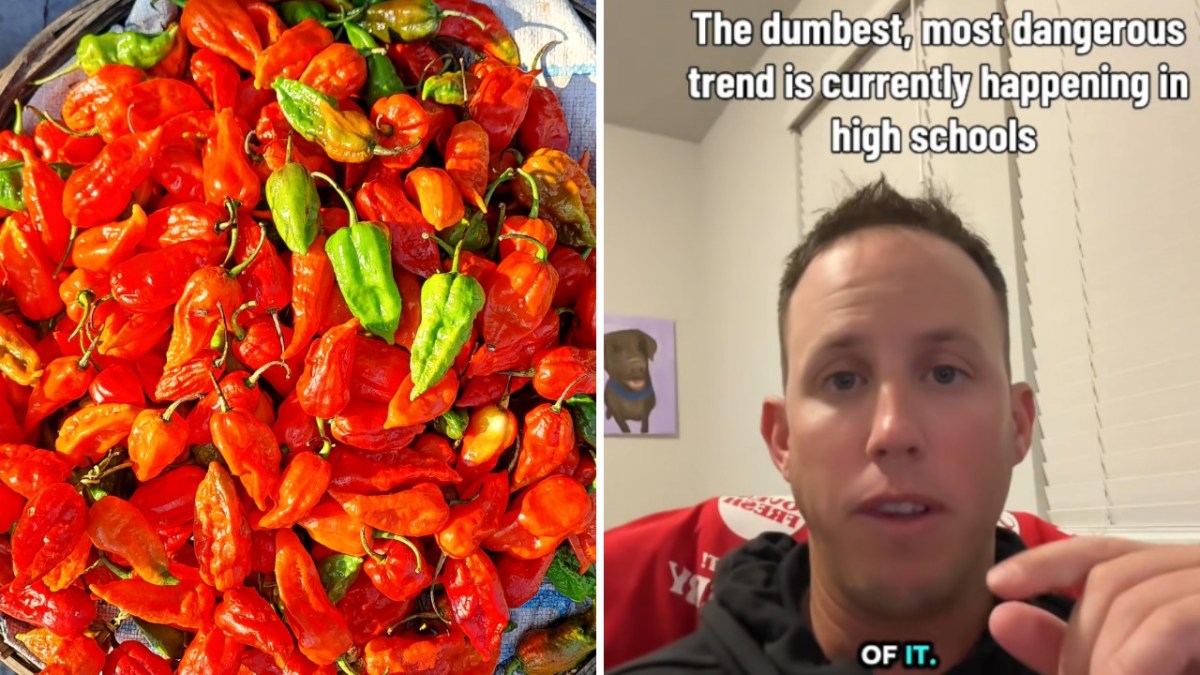

A Texas football coach and teacher is warning that a new food challenge is spreading through his school, several years after the “one chip” challenge drew similar concern nationwide. Posting as @coach_trax, he says teachers need to stay “alert” and students need to stop, according to BroBible, which cited a TikTok video.
“The dumbest, most dangerous trend is currently happening in high schools,” he says in the clip. “It’s all about social status. I’m aware of that. But what people are doing right now has to stop.” He says he knows of four or five students eating Carolina Reaper peppers, ghost peppers, or “any hot hot hot pepper they can get their hands on,” and that it isn’t going well.
He says he’s tried explaining the delayed stomach effects to teenagers who don’t grasp the risk. “OK, y’all have to stop doing this,” he says. “It’s not going to end well.” Capsaicin, the compound that makes peppers burn, isn’t directly toxic in the way a poison is, but it can trigger effects that are.
What the body actually goes through
According to the National Capital Poison Center, symptoms typically include mouth and throat irritation, stomach pain, and vomiting, but severe cases can include chest pain, allergic reaction, heart palpitations, heart attack and stroke. Repeated forceful vomiting can tear the esophagus, a rare but life-threatening injury called Boerhaave syndrome that requires emergency surgery and carries a high mortality rate even with treatment.
That risk isn’t theoretical for teenagers specifically. A teenager in Massachusetts died in 2023 hours after eating a chip made with Carolina Reaper and Naga Viper pepper extract as part of a version of this same challenge; his autopsy found an underlying enlarged heart and congenital heart defect, though doctors said at the time there’s limited research on how capsaicin affects adolescents with undiagnosed heart conditions.
A separate documented case involved a man who developed a confirmed esophageal tear after eating a ghost pepper and required emergency surgery at a hospital, a pepper the poison center rates above one million Scoville heat units, more than double a habanero’s heat. Carolina Reaper peppers rate as high as 2.2 million Scoville units.
Researchers who study these trends say the appeal isn’t really about the pain. Elisa Trucco, an associate professor of psychology at Florida International University, has pointed to the “glamorization” of these challenges online, where the likes and attention are visible but the emergency room visits aren’t.
Alexander DePaoli, a marketing professor at Northeastern University, has suggested the draw is a sense of belonging within a peer group, not the pepper itself.









Published: Sep 21, 2026 03:08 pm