


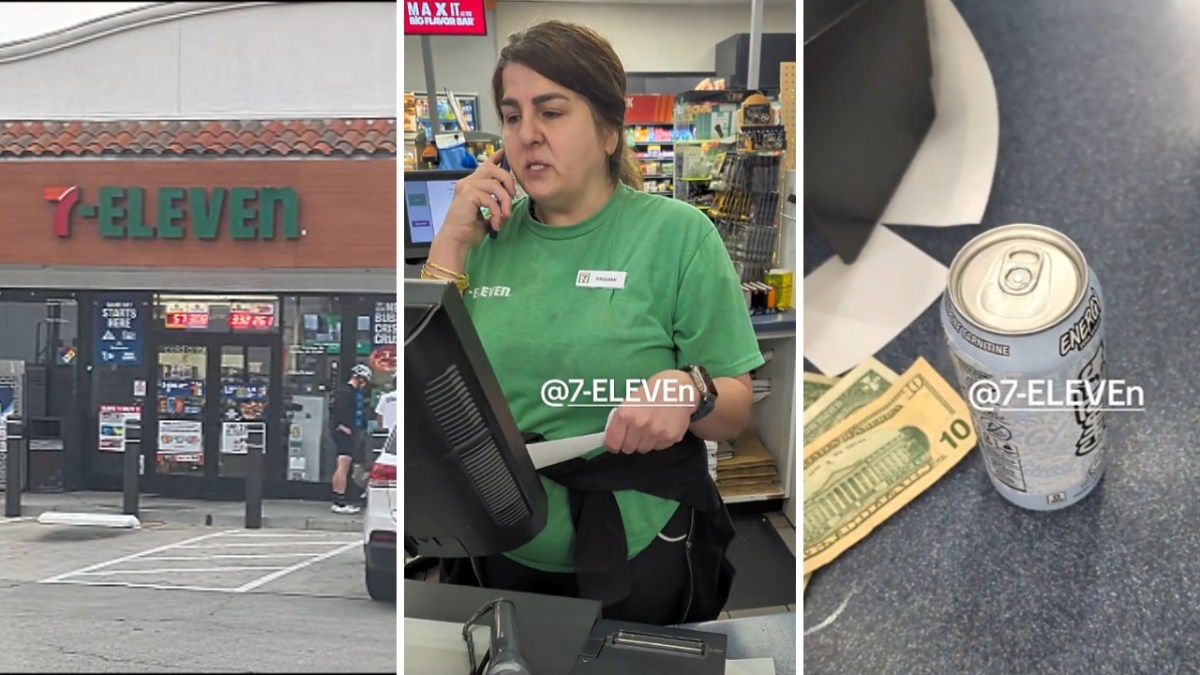

Kevin, a California man who posted about it on TikTok, says a 7-Eleven cashier gave him less change than he was owed, according to The Nerd Stash. He had paid for an energy drink with a $20 bill. When he mentioned it to her, the cashier called police instead of resolving it, telling officers he was “yelling” at her, which his own video doesn’t back up.
She told police she couldn’t locate his transaction, said “Now the idiot’s recording me!” and told officers he looked to be in his 20s and was “Hispanic.” Kevin said he needed to get to work and gave police his name so they could reach him later.
In a follow-up video, Kevin said the cashier came outside afterward and photographed his license plate. According to his own caption, she then told him she was going to call ICE on him. That specific exchange wasn’t captured on camera. He said the entire dispute began over incomplete change for the drink purchase.
What the law actually says about a threat like this
A shortchange dispute alone is typically treated as a civil or internal store matter, not a criminal one. Proving theft under California Penal Code Section 484 would require showing intent to permanently deprive someone of their money. A single register error wouldn’t establish that on its own. Most retail chains also require a manager to recheck the till against the receipt before involving police at all.
A customer in Kevin’s position who believes a store shortchanged them typically has to seek repayment through the store directly or through California small claims court. That court handles disputes under $12,500 without requiring a lawyer. Filing fees there run from $30 for claims up to $1,500 to $75 for claims up to $12,500.
Anyone who has filed more than 12 small claims cases in the past year pays $100 instead. That process addresses only the missing money, not how the store responded to the complaint or who staff called afterward. Lawyers generally cannot represent either side in that court without special permission.
California’s Unruh Civil Rights Act, at Civil Code Sections 51 and 52, separately bars businesses from treating customers differently based on race or ethnicity. A customer who proves that happened can recover actual damages or a minimum of $4,000, whichever is higher. Whether that would apply here depends on proving the cashier’s conduct was motivated by Kevin’s perceived ethnicity rather than the dispute over change, which hasn’t been established.
Threatening to call ICE over a civil dispute is not by itself a criminal act under California law. Neither 7-Eleven nor the cashier has publicly responded to Kevin’s account so far.


Published: Sep 26, 2026 08:39 am