


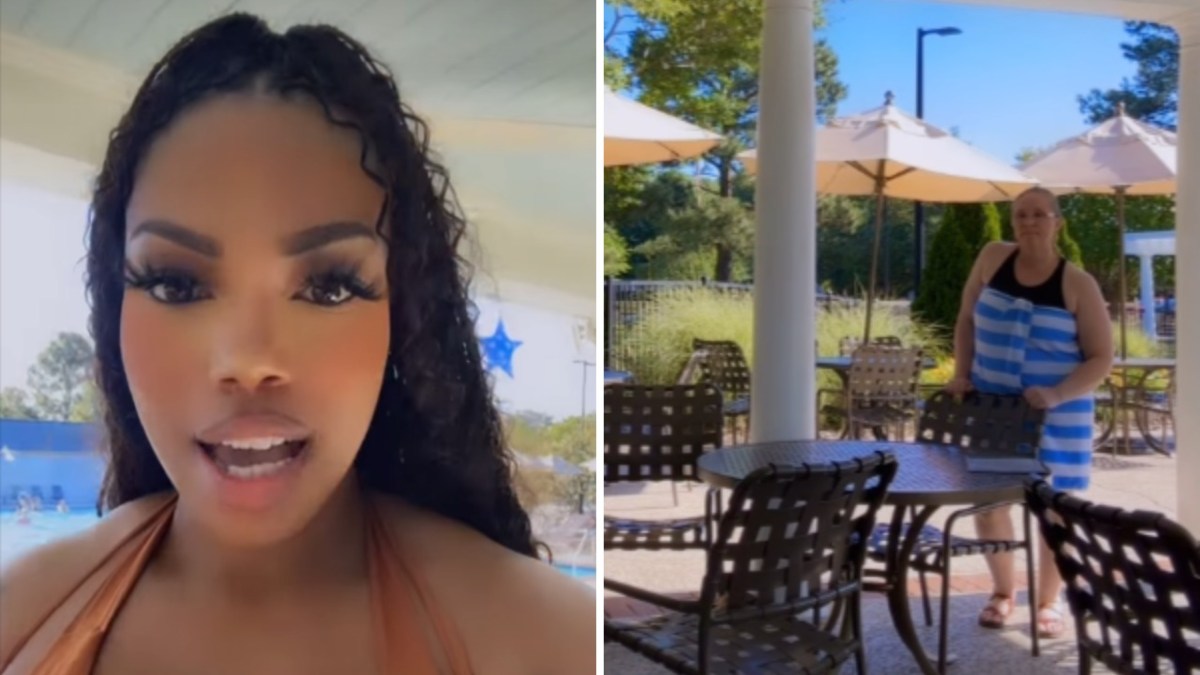

Two women posing for photos at a community swimming area in Coastal Virginia were approached by a mother who told them to stop, according to Atlanta Black Star. She reportedly called the session improper and a distraction to her husband and kids. One of the women posted the encounter to Instagram. The women are fitness model Denise Deandra and actress Nina Banks. Plenty of other people around them were in swimwear, and one of the two had a cover-up on over her swimsuit.
The model laid out her side in her video’s caption. “We were in a small corner far away from the pool,” she wrote. She said the mother and her relatives were using a separate pool on the other side. “We were just minding our business taking pictures. Mind you we weren’t the only people at the pool with 2 pieces on nor the only family taking pictures. I can’t believe she let her insecurity eat her up like that.”
The mother, who has not been identified, wrapped herself in a towel before heading over to the pair. The actress responded by calling her “insecure,” and the mother replied, “I’m not insecure!” The actress then said, “Tell your husband to look a different direction.”
The mother’s response
The mother disputed that her husband had been looking their way. “I’ve got sons and nephews over here,” she said. The actress answered again. “My son is here,” she said, “My daughter is right here. I’ve never heard of this in my life. You can’t take pictures at the pool?”
She then turned to her friend and said, “Let’s take pictures.” The two kept going with their shoot, put a few shots up on their accounts and shared the clip online. Photo sessions in shared public spaces can draw complaints from strangers, as when a woman interrupted a California engagement shoot at a clifftop park.
Pool rules on swimwear vary by operator. The Fairfax County Park Authority in Virginia, for example, lists bikinis among the swimwear approved at its recreation center pools, while thong bikinis and underwear are prohibited. Neighborhood pools run by homeowners associations often write their own attire rules through their governing documents.
According to guidance from the Community Associations Institute, those rules should be reasonable, clear and specific. Enforcement can range from a charge for the violation to being asked to leave the pool area. Virginia law also makes it a crime to knowingly create an image of a nonconsenting person who is nude or in undergarments.
The law applies in places where that person would have a reasonable expectation of privacy, such as restrooms, dressing rooms and locker rooms. A violation is a Class 1 misdemeanor, according to the state code.



Published: Oct 13, 2026 10:55 pm